Author name: Ashley Mathura

Industry Insights, Product, Reading List

South Africa’s Banking & Fintech Moment: Mandates, Challenges, and How Wibmo Can Help 

South Africa’s payments landscape is undergoing a significant upgrade. With the Rapid Payments Programme (RPP) / PayShap rolling out real-time, low-cost account-to-account payments, and long-standing rules like 3D Secure for e-commerce, banks and PSPs have a clear direction: safer, faster, interoperable digital money movement. The task now is execution at scale, with resilience, and without friction.  The Regulatory Backbone: Who Sets the Rules (and Why It Matters)  South African Reserve Bank (SARB) oversees the National Payment System and has set out Vision 2025 goals i.e. competition, innovation, inclusion, and regional interoperability.  PASA (Payments Association of South Africa) mandated 3D Secure for online card transactions (initially by 2014), making strong customer authentication a baseline for CNP risk.  FIC Act / Prudential Authority anchors AML/CFT obligations with risk-based programmes and supervisory teeth.  POPIA (data protection) requires lawful processing and security of personal data; banks also adhere to a sector code of conduct aligned to POPIA.  Market Shifts to Watch  PayShap (RPP) is South Africa’s real-time payments layer aimed at displacing cash with instant, irrevocable, interoperable payments, and it’s gaining traction year over year.  Card-Not-Present (CNP) risk remains elevated: SABRIC reports show CNP is the dominant component of card fraud losses, underscoring the need for better authentication and smarter fraud controls.  Conduct & crypto reforms: the FSCA’s 3-year plan progresses the COFI Bill (market conduct), while broader licensing rules will keep evolving for digital assets and new models.  The Execution Gap: Key Challenges for Banks & PSPs  Balancing real-time speed with real-time risk Faster rails compress decision windows; fraud, scams, and mule activity migrate to instant channels.  CNP fraud & authentication fatigue 3DS is necessary, but a clunky customer experience or static rules can dent approvals and merchant revenue.  Fragmented data & legacy integration Risk signals live across devices, IPs, behaviors, and internal systems; normalizing them without backend rewrites is challenging.  Operational overhead Investigations, rule tuning, and change management drag teams away from strategy.  Compliance by design POPIA and AML/CFT require explainability, auditability, and governance beyond “black-box” scoring.  South Africa’s Strategic Position in the Payments Ecosystem  South Africa’s unique position as a gateway to African markets, combined with its sophisticated banking infrastructure, creates specific opportunities for scalable fraud management solutions. The country’s regulatory maturity and digital payment adoption rates make it an ideal testing ground for innovative payment technologies that can subsequently be deployed across the continent.  While established players currently serve major institutions like PayInc (formerly known as BankservAfrica), the market opportunity for specialized, agile solutions remains significant, particularly for institutions seeking more flexible, cost-effective alternatives that can adapt to local market dynamics.  Where Wibmo Fits: A Product Stack Built for SA Priorities  Wibmo, a PayU company works with issuers, acquirers, processors, and large merchants across digital payments. With proven deployments across emerging markets and growing traction with South African Tier 1 and Tier 2 banks, our solutions address the specific challenges facing the SA market.  1) Trident FRM — Real-time Fraud & Risk Management  What it solves: Instant risk decisions across carded and A2A flows, especially CNP fraud and real-time scams.  How it helps the SA context:   • Aligns with PASA’s 3DS mandate by complementing authentication with risk-based decisioning before, during, and after auth.   • Handles burst traffic from PayShap/RPP-driven volumes, with millisecond scoring to avoid payment latency.  Capabilities you can deploy:   • AI/ML ensemble (10+ models) with enriched device/IP/behavioural signals   • Sub-100ms decisioning at scale; 1500+ TPS proven, scaling toward 3500+ TPS   • 99.99% uptime architecture for “always-on” payment windows • DIY rule authoring & simulation, plus a configurable case manager to reduce investigation time   • Flexible data ingestion—plug in orthogonal data without backend rewires  2) 3D Secure & Contextual Authentication Suite  What it solves: Strong step-up only when needed, preserving approval rates and user experience.  How it helps the SA context:   • Delivers ACS / 3DS Server / RBA components built to meet PASA’s 3D Secure requirement while curbing friction.   • Contextual (risk-based) authentication reduces unnecessary OTPs and cart abandonment.  3) Tokenisation & Data Security Services  What it solves: Lowers PAN exposure and supports POPIA and scheme requirements via vaulting, network tokens, and lifecycle controls.  How it helps the SA context: Minimises sensitive data processing and aids privacy-by-design obligations under POPIA and the banking industry code.  4) Prepaid/Stored-Value Platform (Financial Inclusion & Control)  What it solves: Issuing and managing controlled-spend instruments for payroll, disbursements, youth, or thin-file segments.  How it helps the SA context: Supports inclusion targets in SARB’s Vision 2025 by enabling safe digital value stores and spend controls.  5) Acquiring & Acceptance Enablement  What it solves: Smarter approvals and fewer false declines for merchants; enhanced dispute/fraud handling.  How it helps the SA context: Risk-based approvals can lift merchant revenue and trust in e-commerce while keeping CNP risk in check, given SABRIC’s fraud trends.  The Value of Local Partnership  Working with local fintech providers brings unique advantages to South African institutions:  Rand-based Pricing & Forex Protection: • Mitigate currency fluctuation risks with local currency invoicing   • Predictable budgeting without USD exchange rate volatility   • Contract terms that protect against significant rand depreciation  Local Regulatory Expertise: • Deep understanding of SARB, PASA, and POPIA requirements   • Compliance support aligned with South African banking regulations   • Local legal framework navigation and contract flexibility  Regional Market Understanding: • Solutions customized for African market dynamics   • Understanding of local fraud patterns and payment behaviours   • Gateway to broader African expansion opportunities  Agile Implementation & Support: • Faster decision-making without complex international approval chains   • Local timezone support and cultural alignment   • Flexible contract terms designed for emerging market needs  What Good Looks South Africa’s policy environment already rewards safer, faster digital payments. The opportunity is to combine real-time rails (PayShap/RPP) with real-time risk—without sacrificing user experience or uptime.  Wibmo’s Trident FRM, Authentication, Tokenisation, Prepaid, and Acquiring solutions are built to meet those mandates and close the execution gap – from CNP fraud today to instant A2A at scale tomorrow. With local partnership advantages and proven success across emerging markets, we’re positioned to support South African financial institutions in their digital

Industry Insights, Reading List

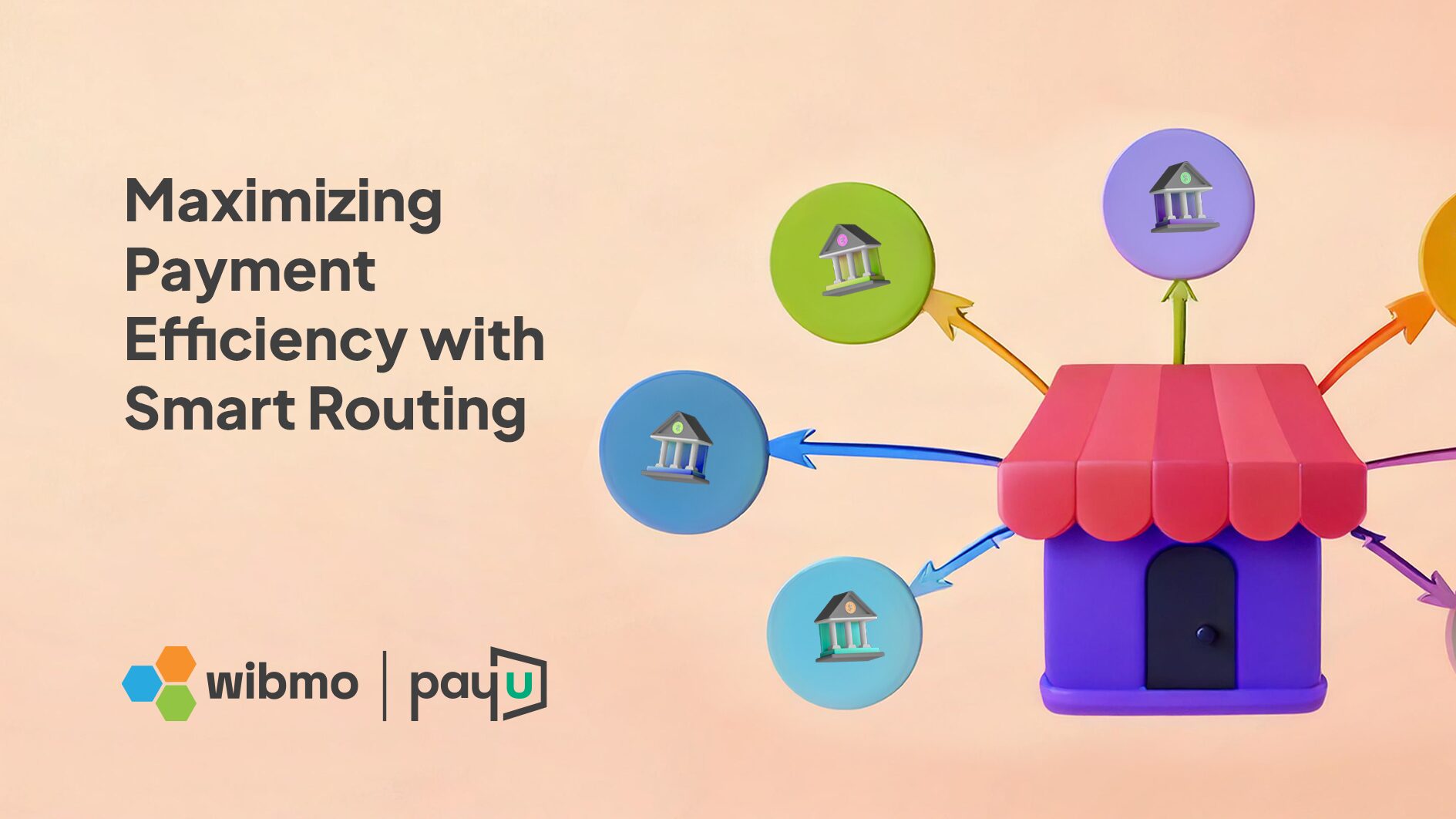
Maximizing Payment Efficiency with Smart Routing

The Digital Payments Roadmap report, recently published by the South African Reserve Bank (SARB), identifies high merchant fees as a significant contributor to the low adoption and use of digital payments by merchants. Additionally, high interchange and merchant card processing fees deter smaller merchants from accepting digital payments, as these fees negatively impact profitability. Achieving optimal performance in digital payments is essential for businesses and for meeting the broader financial inclusion goals set out in the SARB’s Vision 2025 Framework and Strategy. The landscape of digital payments is constantly evolving, with new regulations, network mandates, and issuer preferences emerging regularly. To navigate these changes effectively, companies need a comprehensive toolkit that not only keeps them informed but also helps maintain high acceptance rates and ensures a seamless customer experience. Intelligent payment routing, or smart routing, is a critical component of this toolkit. It automates the process of directing transactions to the Payment Gateway that offers the highest likelihood of acceptance at the low-cost high success rate, addressing the significant issue of Transaction failures How Intelligent Payment Routing Works Intelligent payment routing determines the best path for processing a payment to maximize successful transactions while minimizing costs. This can involve routing through different payment providers (payment orchestration) or networks, considering factors such as efficiency, reliability, and cost. Merchants can set criteria for automated routing based on their specific objectives. Key Benefits of Smart Routing: Smart Payment Routing Through Different PSPs Payment orchestration involves smart routing through various payment service providers (PSPs). The routing software evaluates factors such as customer location, payment currency, transaction amount, and card type to determine the best provider for each transaction. This approach ensures that payments are processed through the provider with the highest Conclusion In conclusion, Smart payment routing is a vital tool for businesses looking to optimize their digital payment processes. By automating the selection of the most efficient and cost-effective payment routes, companies can significantly enhance their revenue, reduce processing costs, and improve overall payment performance. The ability to dynamically route payments, access real-time data, and integrate with multiple payment providers ensures that businesses can adapt to the ever-changing digital payments landscape. As digital transactions continue to grow, the importance of intelligent payment routing will only increase, making it an indispensable part of any comprehensive payment strategy.

Scroll to Top