
Secure Payment

Reading List

Browser Fingerprinting- Part 2

Are you all set to find out more about browser fingerprinting? We bring you Part 2 of this series. Types of Fingerprinting Techniques: Canvas Fingerprinting: The browser fingerprinting technique uses the HTML5 canvas element to identify variances in a user’s GPU, graphics drivers, or graphics card. Steps- First, the script draws an image, often overlaid with text. Then, the script captures how the user’s web browser has rendered the image and text. Naturally, every device with different hardware and drivers will render the image slightly differently, distorting its colour and shape. A hash is then computed using the rendered image’s data, which serves as the ‘canvas fingerprint.” The scripts used for canvas fingerprinting operate in the background to keep the user from realizing that the fingerprinting is occurring. This fingerprinting technique is accurate and not too processing-intensive, making it one of the most commonly employed script techniques. The visitor’s specific browser and device render images, which can be narrowed down to a pool of fewer than 0.01% of total visitors. WebGL Fingerprinting: WebGL fingerprinting is very similar to Canvas fingerprinting, as they both use the browser to render images off-screen. The WebGL API can be used to render 3D forms in the browser. With the help of the three.js JavaScript library, many 3D forms can be rendered, such as Sphere Cube Precomposed geometric shapes The test is not that reliable because it is too sensitive to changes in the environment, such as the size of the browser window or the use of the browser console. These changes caused the dimensions of the rendering context to be updated, which resulted in different rendering results when the page was reloaded. The methodology is still to use images to distinguish users based on their graphics drivers and device hardware. Media Device Fingerprinting: This technique uncovers a list of all the connected media devices and their respective IDs on a user’s laptop or PC. This includes all internal media components like video cards and audio cards, as well as all connected or linked devices like headphones. Media device fingerprinting is not widely used for fingerprinting functions. This is because it requires the user to grant access to their microphone and camera to get a complete list of connected devices. Audio Fingerprinting: While other fingerprinting techniques force browsers to render a text or image, this technique checks how their devices play sound. The browser vendor and version used impact minute differences in sound waves generated by a digital oscillator and differences in CPU architecture. Clock Skew: Clock skew is a measure that can be used to identify the hardware specifications of a machine by analyzing the uneven arrival of electrical signals from a clock generator at different components. These differences can be affected by temperature variations in the hardware and can be analyzed with sufficient data and numerical analysis. This is considered an extreme measure in the field of fingerprinting. Browser fingerprinting workflow: Utilizing browser fingerprinting for authentication during payments as an additional layer of security and protection against fraud is helpful, but it has to be coupled with a two-factor authentication process. Two-factor authentication involves verifying a user’s identity using two different methods, such as a password and a fingerprint or a code sent to their mobile device. By adding browser fingerprinting as a third factor, Wibmo’s Trident FRM solution uses canvas fingerprinting and creates a more secure and reliable payment authentication process. It is important to ensure that proper privacy protections and data security measures are in place, as browser fingerprinting data is unique to each user and can be used to track and identify individuals across different websites and devices. Additionally, it’s important to comply with data privacy regulations such as GDPR, CCPA, and the upcoming Digital Personal Data Protection Bill when collecting and storing browser fingerprint data. Fingerprinting and Online Fraud Detection: Browser fingerprinting techniques can be useful for identifying and targeting visitors with a pattern of fraudulent behaviour on a website. These techniques can be particularly effective in identifying users who use identity concealing techniques such as disabling cookies, using a VPN, or browsing in incognito mode. 1.In cases of account takeover, where malicious users try to hack a legitimate user’s account, fingerprinting and other user identification technologies can be used to add additional security measures to the login process for suspicious traffic only. 2.To prevent brute force or bot attacks, it is best practice to require users to solve a CAPTCHA after a certain number of failed login attempts and to lock out the user for a set time after a certain number of attempts, as such attacks often rely on automation and thus may not have the unique browser configurations of genuine users. a. Browser fingerprinting can detect bots through their unusual browser configurations. b. Multiple login attempts with the same fingerprint can signal a brute-force attack. c. Bots that either lack a unique fingerprint or use identical fingerprints can be spotted and investigated. d. It can improve CAPTCHA systems by triggering a CAPTCHA when a fingerprint is linked to suspicious activity. 3.For phishing scams, requiring email or two-factor authentication for new fingerprints attempting to log in and blocking repeatedly visited fingerprints can also be effective measures. Conclusion: Limitations and current scenario of browser fingerprinting: Author: Vaibhav Chandel, Product Manager Wibmo A PayU/Naspers FinTech Company BaaS
Industry Insights, Product, Reading List

Importance of Fraud and Risk Management Solutions for Financial Institutions

Technology and trust must go hand in hand Technologies are undoubtedly transformative for businesses and their customers. But to fully deliver the promised benefits, technologies must consciously build trust amongst all legitimate users and stakeholders. Trustworthiness is becoming critical by the day in an increasingly digital world because of the rising incidence of online fraud. Just as quality at the source is a mantra for manufacturing companies, the detection, and prevention of fraudulent transactions as soon as they originate is important for banks and financial institutions. At the same time, customer convenience has to be balanced out. Regulators expect banks to enhance their digital abilities to detect/prevent frauds/crimes Regulators play a key role in ensuring the safe, smooth, and efficient functioning of the banking and financial systems within their individual jurisdictions. As such, central banks worldwide have begun to tighten various regulatory requirements in order to reduce the risk of fraud made possible by technological or process loopholes in the systems used by banks and other financial institutions. In March 2022, the Bangko Sentral NG Pilipinas (“BSP”, the central bank of the Philippines), published amendments to its “Regulations on Information Technology Risk Management” with the specific objective of enhancing customer protection. To ensure that digital banking channels are made safer and more reliable, the BSP requires banks operating in the Philippines to implement automated and real-time fraud monitoring and detection systems capable of identifying and blocking suspicious or fraudulent online transactions. Starting 1 September 2022, banks must be prepared to show BSP their action plans; and full compliance with a readiness plan is expected by 31 December 2022. While the Fraud Management systems implemented must commensurate with the bank’s operations and the scope of its digital platforms, BSP does expect that the solutions that banks put in place will, at a minimum, deliver the following capabilities: · Monitoring, collecting, and analyzing transaction data arising from all physical and digital banking and non-banking channels; · Integration with the bank’s Anti Money Laundering (AML) systems to provide a more robust and comprehensive mechanism to prevent financial crimes (and not just detect them); · Building customer profiles and analyzing behavior to detect frauds based on changes in usage patterns; and · Secure scalability to handle growing transaction volumes. FRM solutions must give robust Fraud detection and prevention capabilities without damaging customer relationships Frauds and other operational risks not only damage customer confidence in individual banks (and the banking system as a whole) but can also lead to financial losses (reparations, penalties) and harm your brand/reputation. Clearly, the costs of not having a state-of-the-art Fraud & Risk Management System (FRMS) are high. While there are many FRMS solutions out there, not all of them are equally efficacious. This is because each one uses different protocols to detect and analyze risks and thereafter, determine further courses of action. Wibmo’s Trident FRM platform offers multiple advantages Wibmo’s Trident is an enterprise fraud and risk management platform that uses advanced authentication protocols and ML-driven statistical models. Our platform makes approval/ challenge/ decline decisions based on rigorous, real-time assessment of more than 100 parameters related to the device, user, and transaction (e.g., merchant, location, IP address, time of the transaction, value, etc.). This Risk-Based Authentication (RBA) approach provides a more robust and reliable assessment of the risk of every individual transaction. The omnichannel capability of the platform is an added advantage wherein the bank’s operations team gets a central view of their customer’s transactions across channels For banks operating in the Philippines, Trident can ensure full compliance with BSP’s amended regulations within the stipulated timeframe. However, irrespective of where your bank operates, there are many other reasons why Trident could be the right FRMS solution for your bank: · Many banks rely on disparate legacy systems and point solutions for specific functions (e.g., AML, branch-based KYC transactions, etc.). Integrating data from myriad systems is neither easy nor efficient; the chain is only as strong as the weakest link. Therefore, our risk management platform is API-driven. What is more, it uses 360o degree customer data and insights to detect anomalous behaviors that might indicate fraud or misuse. · Trident is sensitive to the need for banks to deliver a seamless, speedy, and superior customer experience for every legitimate transaction; this minimizes customer friction– key to building loyalty and enhancing lifetime value. · Customers (and fraudsters) can use multiple channels to effect transactions (e.g., 3DS, mobile payment, ATM/POS, online retail/corporate banking). The FRMS solution your bank adopts must be able to function equally effectively- and seamlessly- across channels (to handle situations where customers legitimately switch channels). Our platform uses AI/ML to safeguard customers, merchants, card issuers, and networks in an omnichannel environment. Sometimes, frauds are perpetrated at the merchant level (e.g., by employees misusing customer cards for fraudulent transactions). The Trident platform can detect and prevent such misuse as well. Trident enables full compliance with FATF and AML-CFT, thus helping to prevent financial crimes. · Your bank works with various card networks (Visa, MasterCard, American Express, etc.). Trident is compatible with all networks; it gives you get a network-agnostic RBA score thus strengthening your bank’s overall ability to detect, prevent and manage fraud risks. · Trident can be fully deployed on Cloud, thus assuring high availability and scalability so that 100% of your bank’s transactions are processed in real-time to validate the authenticity and assess risk before completion. · Our FRMS platforms are rules-driven. This lets your bank respond quickly to emerging threats with the help of “quick rules” and “expression rules” for more complex threat scenarios. The bank will also be equipped with Rule Wizard wherein the operations team can build rules on the fly · Quick investigation and resolution of transactions are important to ensure customer satisfaction, and regulatory reporting/compliance as well as enhancing the bank’s preparedness to prevent future false positives. Efficient and workflow-driven case management capabilities built into our platform allow investigators to track, investigate and resolve transactions quickly. This also reduces your bank’s operational expenses– a major benefit gave the pressure on margins. · Banks that adopt

Industry Insights, Product, Reading List

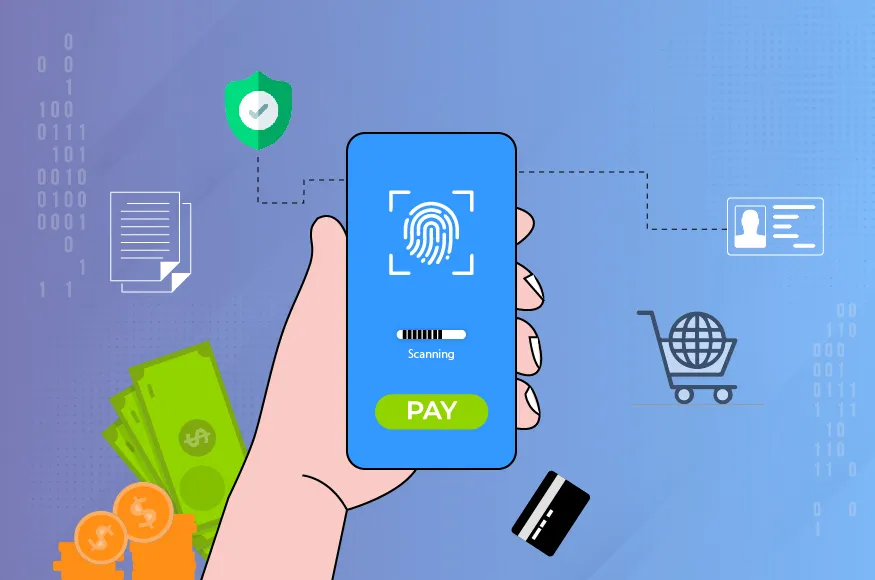
Why is Biometric Authentication becoming the headline in the world of Digital Payments?

The last decade has witnessed a progressive adoption of technology in almost all the industry. Few industries like banking and fintech have embraced the technology to grow in leaps and bounds. The revolutionizing spread of internet has ushered in an incredible increase in the number of the users and in turn the addressable market. The hitherto latent yet humongous body of rural population is today enabled with fintech services like online payment and transaction and even Ecom. The one word which has propelled the whole population into the digital payment however is rather old fashioned -TRUST Let’s dive deeper with an example. When a small business owner from a village in Bihar pays a vendor residing in another state, he needs be assured that the payment would indeed be done. Similarly, a migrant labourer, slogging in the southern state need to believe that his hard earned money is indeed going to reach his family in a matter of minutes if not seconds. However both the people also need assurances that it would be paid only to the intended parties and not to anyone else! Authentication: The foundation of trust in the digital payment space Authentication is used most commonly to assure the consumers of reliability. However, the question remains if the authentication mechanisms used currently produce the highest levels of trustworthiness. Let’s delve into the circumstances where multifactor authentication is the best option. The following two out of the three ways have proved to be a strong medium for payment authentications: · Possession: for example, a documented identify or device, etc. · Knowledge: for example, a password or secret, etc. · Inherence: for example, their fingerprint, hand, face, etc. History of Biometrics — An evolved tool used in payment securities Although biometrics go way back into human history, the contemporary commercial usage of biometric authentication began in the mid-nineteenth century using fingerprints by William James Herschel, a British administrator in India. Biometric authentication gained popularity among consumers and service providers with the rising usage of feature-rich smartphones and other devices enabled with high-resolution cameras. The instant gratification was stoked with the biometric authentication as it is based on the biological traits which are unique to every individual and cannot be faked. One of the most widely used examples of biometric usage is that of Aadhaar card in the Indian Market: All Indian residents are given an Aadhaar number, which is a 12-digit unique identification number. This figure is derived from their biographic and biometric data (a photograph, ten fingerprints, two iris scans). The concept was originally related to government subsidies and unemployment benefits, but as its authenticity is proved, it now includes a payment scheme. The growth of biometric payments in a post-pandemic world According to global surveys, the pandemic has heightened awareness and acceptance of biometric payments. This popularity doesn’t show any signs of abating as we step into the post-pandemic era, thanks to a focus on sanitation and contactless payments. Biometric authentication is popular due to the simple and uncomplicated process that it entails. Unlike the conventional authentication techniques, which suffer from glitches like not getting an OTP or issues with the strength of the internet network. Biometric payments are becoming more popular in large and densely populated countries such as Russia, South Africa, Kenya, Nigeria, Ukraine, India, and others. Consumers sense the simple and foolproof option of biometric authentication is safer, quicker, and simpler. Biometric authentication provides several advantages over knowledge-based and possession-based authentications: 1. It’s universal, as these metrics can be found in every human. 2. It is unique. 3. It is permanent, as metrics like fingerprint or dental don’t change. 4. It can be easily recorded if the consumer wants it to be so. 5. Finally, it can be measured for comparison and cannot be falsified. Conclusion: Though there have been cases where Biometric authentication based on statistical algorithms may occasionally provide false positives, resulting in erroneous results, the benefits of using biometric authentication for digital payments outweigh the drawbacks. This is causing a significant shift towards its adoption, and it seems to be continuously growing. In a diverse socioeconomic environment like India which has a population that is both cost-sensitive and aspirational, there is no other solution that can beat biometric authentication. Author: Shatrughan Sharma, Global Head- Payment Security Wibmo A PayU/Naspers FinTech Company Authentication, Biometric Authentication, Global Digital Payments, Payments, Secure Payment

Scroll to Top