
Author name: Wibmo

Industry Insights, Reading List

Understanding ONDC and what banks must do to benefit from it

Introduction: what is ONDC and why it is a game-changer for India India’s digital commerce industry is growing rapidly. From around US$38 Billion in 2021, it is expected to touch US$120 Billion by 2026 (source: KNN India), and possibly cross US$200 Billion by 2029 (source: India TV News). Given the country’s demographics and internet penetration, digital commerce is still an underserved market in India. Thus far, its biggest beneficiaries have been large monopolistic marketplaces/platforms because of the massive investments needed. But there is a change in the air. Technology-led innovations such as India’s Open Network for Digital Commerce (“ONDC”) are creating open, network-centric digital commerce models to compete with existing platform-centric models. ONDC promises to revolutionize the country’s digital commerce landscape by democratizing access/participation. Over the next few years, the transformative effect will be similar to what UPI has done for digital payments. ONDC is a public infrastructure project being executed by a non-profit organization under the aegis of the Government of India’s Department for the Promotion of Industry and Internal Trade. In April 2022 pilot projects began in five Indian cities; 100 cities are to be covered by the end of August 2022. A number of public and private sector banks (e.g., SBI, PNB, Kotak Bank, Axis Bank, HDFC Bank) have already invested in ONDC. The “my way or the highway” approach taken by many proprietary e-commerce platforms has led to predatory practices. Smaller businesses are disadvantaged because they inherently lack bargaining power vis-à-vis these e-commerce marketplaces/platforms. ONDC aims to create a level playing field for thousands of small businesses across India as well as customers living in rural areas and smaller towns so that they can all benefit from digital commerce. ONDC is effectively a platform that allows you as a consumer to search and buy products/services that are currently offered only on multiple marketplaces, without having to log into each of them. You can conveniently browse and buy products that are listed on Amazon, Flipkart, Meesho, Myntra, Neu, or indeed anywhere else- using just one app. As a seller, registering on this platform gives you access to customers of multiple marketplaces. There is no need to list on multiple marketplaces, be tied to specific delivery partners, or comply with the different requirements of these platforms. The main beneficiaries of ONDC ONDC is designed to benefit three main categories of stakeholders: · Small businesses/suppliers of goods and services, who can access a larger market; · Customers across India (especially those in smaller towns and rural areas), who will get greater choice and better prices; and · Banks, who get another chance to be a relevant intermediary in digital commerce (both in the retail and SME space). Since the launch of UPI-based payments in 2016, proprietary payment platforms owned by non-banking players such as Google, Amazon, PayTM, etc. have accounted for a majority of digital payment transactions, especially in the retail space. Banks found themselves left behind. Both sellers/merchants and buyers/consumers are banks’ traditional customers, but third-party digital apps have effectively disintermediated them. By registering on ONDC, banks can offer solutions to both sets of customers. Banks get the opportunity to efficiently monetize their relationships with customers- a key source of competitive advantage in an increasingly digital, ecosystem-driven world. ONDC will give banks access to a much larger base of prospects and customers; it will also allow banks to offer these customers a larger bouquet of products/services (both banking as well as those offered by partners on the network). For example, banks can target retail customers with offers related to insurance, wealth management, loans, deposits, etc. Just as important is the opportunity that ONDC will provide banks to deepen their relationships with Current Account customers. India’s SMEs in particular have begun to gravitate towards fintech players and if this trend intensifies, it can spell trouble for corporate banks. Given that ONDC is designed to attract large numbers of SMEs, it affords banks a good opportunity to build and strengthen their relationships with customers in this segment by offering a larger portfolio of services, including working capital loans, Capex loans, export credit, etc. Thus, banks that choose to be part of ONDC can expect to capture greater mindshare (and hence, wallet share) of customers who choose to be active on the ONDC network. Given the “all-digital” nature and national/global reach of the ONDC, banks no longer need to worry about catering only to “local” customers (whether retail or corporate). Across segments, ONDC can help banks reduce costs of customer acquisition and service delivery, thereby boosting profitability and margins. Banks will need to upgrade their technology stacks to benefit from ONDC To offline merchants/sellers, banks either offer QR codes or PoS-based payment solutions or Open Banking based Payment Gateways to e-commerce players. Therefore, banks need a deep integration of their mobile apps with those of partner merchants and/or aggregators to enable customers to use their mobile banking apps. The objective is to build stickiness for the banks’ mobile apps, but the absence of an industry-standard protocol makes this expensive and time-consuming. All this will change with ONDC. Instead of direct integration with merchant apps, banks will need the capability to connect with the ONDC platform using a standard Beckn protocol, which is an “open, interoperable and universal transaction protocol to enable a decentralized digital economy,”(source: beckn). This will enable customers to use the bank’s app to: · easily register on the ONDC platform and discover products/services; · search for products/services they need using criteria such as geo-location, sellers, price ranges, etc.: · Make purchases; and · Manage returns and resolve disputes more easily and speedily. Provided banks are ready with the necessary technology components for ONDC, they can thus deliver access to a wider range of products/services as well as a smoother customer experience. Merchants joining ONDC will expect banks to provide a complete Digital Commerce solution that seamlessly integrates offline/online registration on the platform with transaction experience and banking services such as collecting customer payments and paying suppliers. Banks
Product, Stories

What is Risk-Based Authentication and why banks should implement it?

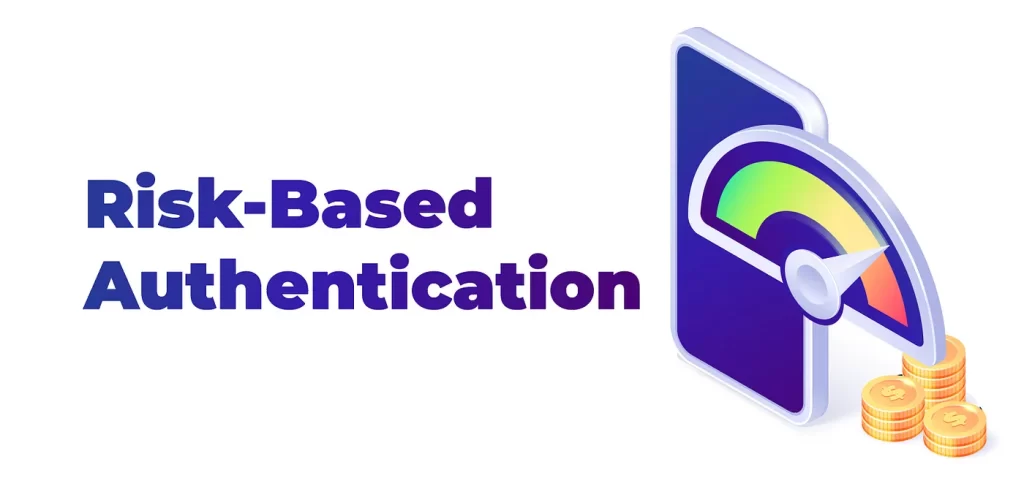
Driven by the trifecta of smartphone penetration, low-cost data rates, and higher incomes, the Indian e-commerce market was expected to grow to US$ 200 billion by 2026. Covid-19 has caused an inflection point for the e-commerce market in India. A Bain & Company-PRICE survey of 3000 households across income groups and geographies which was conducted between April and June, revealed about 13% of respondents buying online for the first time, while about 40% buying more online. An NRF survey showed that nearly 6 in 10 consumers say they are worried about going to the store due to fear of being infected. Figure 1: Growth of credit cards in India (Source: RBI database, Bank-wise ATM/POS/Card Statistics various years) The majority of the growth is from online shoppers in Tier 2 tier 3 cities. The pandemic has also seen a surge in UPI transactions. While credit cards did a total of 185 million transactions delivering a value of INR 805K million, UPI delivered a staggering 3654 million transactions with a value of INR 6543K million as per RBI and NPCI statistics for Sep 2021. Key Challenges and Solutions: With the spectacular growth in the eCommerce market sophisticated online payment frauds and threats have mushroomed too. An e-commerce transaction involves multiple entities at various stages, such as the marketplace, merchants, payment gateways, financial institutions, apart from the end consumers, and each of them can act as a vulnerability or attack point for malicious actors. For example: The end customer fraud making fraudulent claims, chargebacks, fake buyer accounts, promotion/coupon abuse. Malicious fraudsters involved in account takeover, identity theft, card detail theft, etc. Data leaks compromise millions of consumer details every year contributing to digital fraud through impersonation globally. Fraudulent merchants who could deploy “bust out” merchant fraud and transaction laundering mechanisms to defraud acquirers. However, transactional and identity security is not the only concern of financial institutions. This must be balanced with customer experience. Customer loyalties now lie with merchants and banks that offer the best experience in terms of convenience, speed, and security. With the myriad of devices, payment authentication options, and processes every digital bank faces the ultimate challenge of balancing optimal security and a seamless customer payment experience. This is where Wibmo’s Trident FRM makes a difference. Trident FRM is a comprehensive, omni-channel, risk-based authentication (RBA) solution that identifies and manages fraud in real time. It does so by building a holistic customer profile from diverse data points. Figure 2: Risk-Based Authentication A customer’s transaction journey begins on a checkout page or a bill payment action or when a customer does a fund transfer (wire transfer). These actions result in the customer connecting to the bank’s server and the bank’s server is an integration point for Trident to evaluate the risk of every transaction done by the user in real-time. Trident uses the data it receives from multiple channels and devices. Data comes in various forms, like: Transactional data: Card number/account number/phone number, amount, currency, merchant or payee information, billing, and shipping addresses. Location data: Terminal id, IP address, approximate latitude and longitude, ISP data. Device data: (SDK App ID, Browser information, proprietary device-fingerprinting) User information: Time of the day for this transaction and any deviations from past customer behavior using historical data. With more than 100 data points (in the case of online e-commerce), and a powerful set of operators Trident can write rules for almost every fraud scenario using an intuitive rule builder screen. In addition, Trident employs advanced analytics and machine learning algorithms to generate a real-time score and decisions for every transaction. The decision can be one of the following: Low Risk: These are transactions that can be ALLOWED to proceed without challenging for OTP thereby delivering a seamless customer experience. In Wibmo’s experience, more than 90% of the transactions fall under this category. Medium Risk: Transactions that are suspected are risky enough to challenge using a multi-factor authentication method. High Risk: Transactions that are suspected to be very high risk and suggested to be declined. Any suspected fraudulent transaction is marked as a case for automated action or manual investigation and closure in the Case Management portal. An efficient case management portal drives both proactive and reactive fraud cases using consolidated data across channels. It also generates various reports that are required for regulatory and compliance purposes. Benefits of RBA are: Reduced financial losses due to fraud. Customer delight due to seamless payment experience. Improved compliance with local and global regulatory requirements. Reduced total cost of operations by managing fraud cases efficiently and limiting the number of cases routed for manual review. Impact Analysis: So, a frequently asked question is: What is the impact of doing risk-based authentication? For a credit card online purchase (card not present) scenario, RBA using Trident delivers almost 6–8% improvement in success rates for banks and almost 40% reduction in latency for completing the transaction for the end customers. To put this in perspective, as of Dec 2020 with an average ticket size of credit cards was Rs 3,653 and with 20 lakhs transactions per month for online transactions, for a given bank and assuming a 1% MDR, this is an additional uptick of 43 lakhs every month. Wibmo processes cards not present transactions for many of India’s largest banks. For a large bank with more than 150 lakh transactions, we were able to save close to Rs 5 lakhs in a month. Conclusion: As transaction volumes are set to grow in double digits year on year, and as customers expect to transact from anywhere using multiple devices, the threat of increased online fraud becomes more real. Customers want speed and convenience balanced with security, therefore, banks that deliver the most optimized services will win customer loyalty. Hence, it becomes imperative for issuers to be integrated with robust, omnichannel fraud detection and prevention risk engines. RBA solutions such as TRIDENT FRM is a cost-effective solution that empowers banks to stay one step ahead of fraudsters and deliver delightful customer experiences which they have come to expect in today’s digital world. Author: Ajit Nair, Director Product, and Programs Wibmo A

Scroll to Top